
Find Sun Prairie Public Records for a Background Check
Sun Prairie makes background checking fairly practical because the city routes records through a clear public access system, a police records bureau, and a municipal court office that each handle different pieces of the record trail. That matters when you are trying to find the right document quickly. A request for a city file is not the same as a request for a police report, and neither one is the same as a municipal court case search. Once you separate those categories, the search gets much easier to manage and the office you contact can usually tell you whether you are in the right place.
Sun Prairie Public Access to Records
Sun Prairie's public access page at https://cityofsunprairie.com/260/Public-Access-to-Records is the city's main records starting point, and the research says it supports both city and police portals. That makes it the best first stop when you are not yet sure which office holds the document. The page also tracks requests by email and security key, which is helpful because it gives you a way to follow the request rather than wonder whether it disappeared into a general inbox. For simple requests, the research notes that the city typically responds in about ten working days, which gives you a realistic expectation for a straightforward search.
The public access page at https://cityofsunprairie.com/260/Public-Access-to-Records is the source for the image below. It is a strong fit because it represents the city's formal request entry point rather than a vague city homepage.
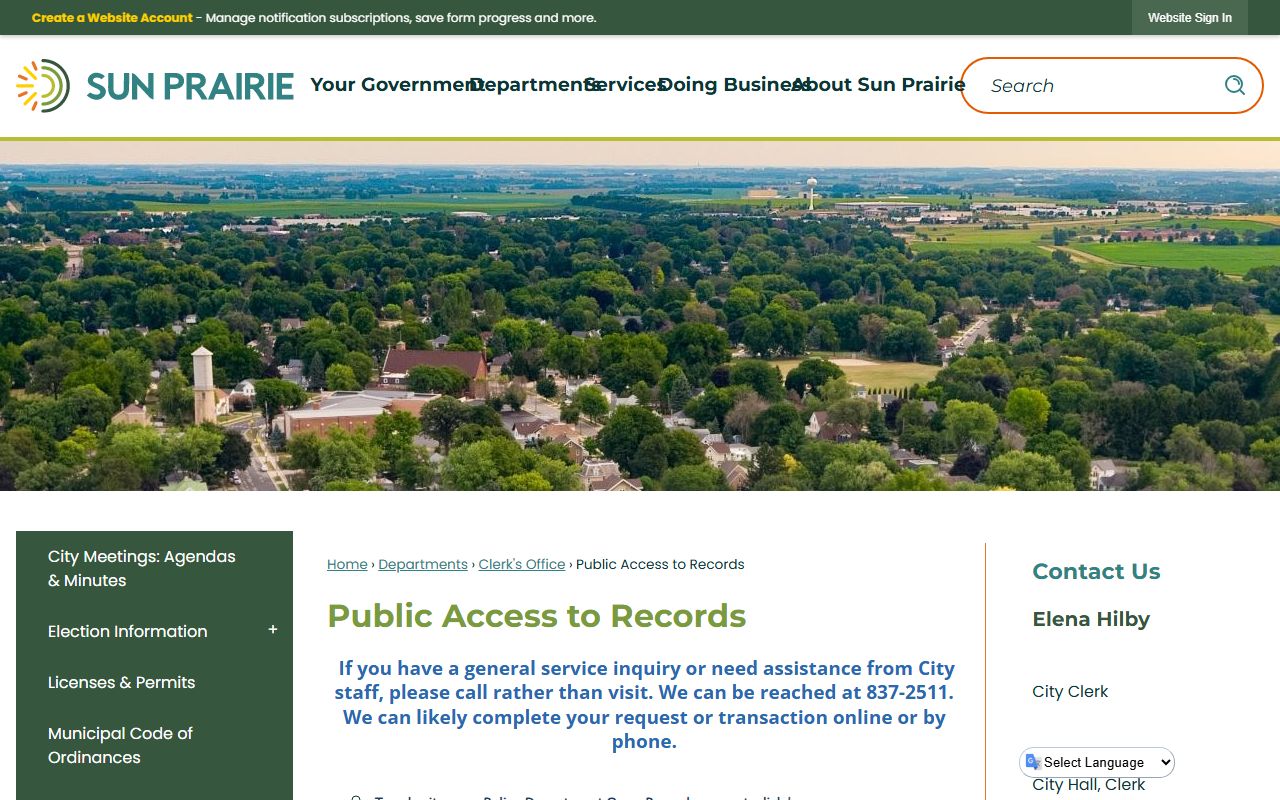
That image works especially well for a background check because it points to the portal that tracks the request from start to finish. When a city offers a tracked system, it usually means you can see whether the request has been received, whether a follow-up is needed, and whether the search is still moving through the queue. That visibility makes the records process less frustrating and helps you keep the request narrow instead of guessing at the next step.
Sun Prairie's public access setup also helps you keep city records separate from police records. If you are asking for a council record, a permit file, or a non-police city document, the public records portal is usually the cleanest first contact. If you are asking for an incident report or a police-related file, the portal still helps because it directs you into the proper city system before you contact the records bureau directly. That separation keeps a background check request organized and avoids sending every question to the same office.
Sun Prairie Police Records
The Sun Prairie Police Department has its own records path, and the research notes a records bureau phone number of 608-837-7339, office hours from 8:00 to 4:30, payment methods, and fingerprinting services. Those details matter because they tell you the police office is more than a simple intake desk. It is the place where report requests, payment questions, and identity-related services all meet. If you need an incident report, a case follow-up, or another police record connected to a background check, the records bureau is the right office to call first.
The police tracking page at https://sunprairiewi.justfoia.com/publicportal/home/track is the source for the image below. That source is a good fit because it shows the police records request workflow rather than a generic department homepage.
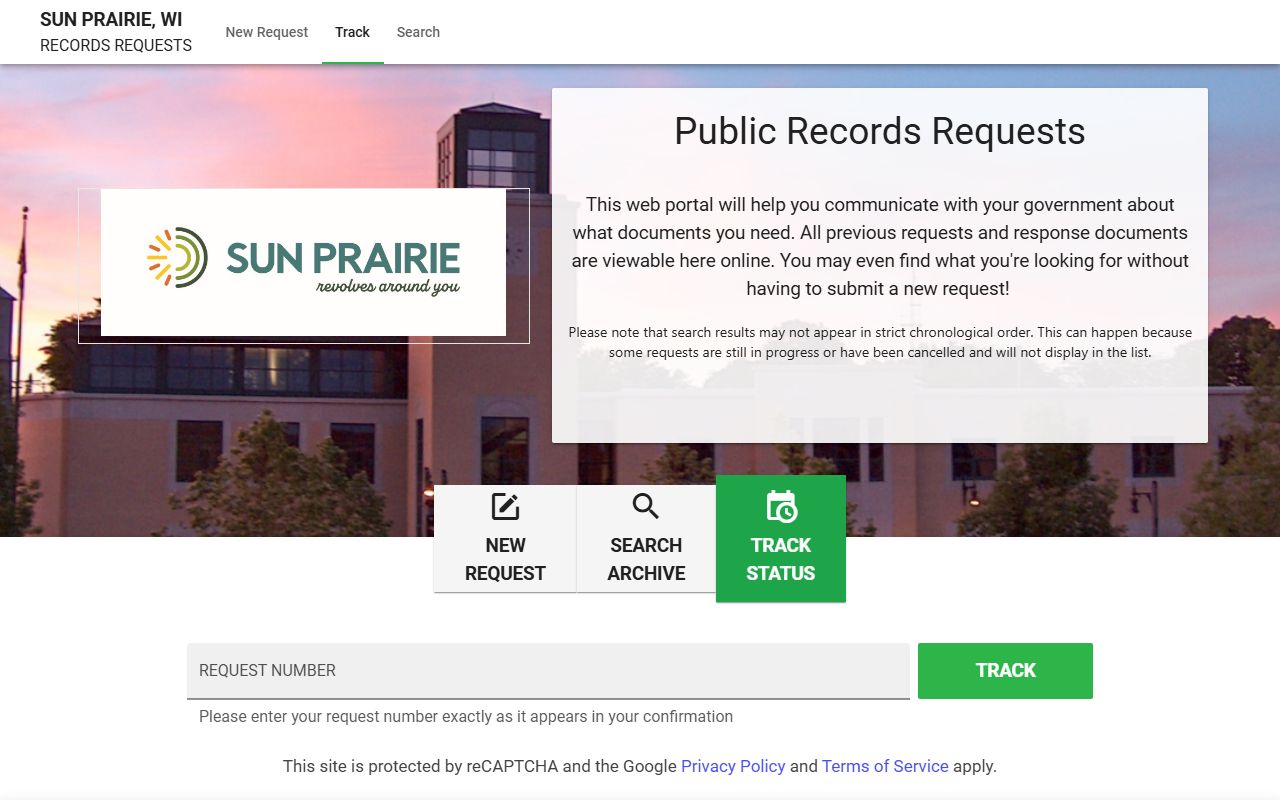
The image fits the request path because police records often need a tracking system, not just a single email address. A case can involve payment, a release review, or a follow-up question about what exactly should be copied. Sun Prairie's police process is designed for that kind of request handling, which is why the records bureau details are so useful. If you already know the date, address, or parties involved, include them in the request so the department can locate the correct file without having to guess which incident you mean.
Police records are often the most direct source for background check material because they capture the event at the point of response. If a call for service, accident, or complaint is the core of your question, the police file is the record that explains it first. A later court case may show the legal result, but the police bureau is the place to confirm what was reported and how the incident was initially documented.
Sun Prairie Municipal Court
Sun Prairie Municipal Court sits at 300 E Main Street, and the research identifies clerk Lisa Cestkowski and the phone number 608-837-9541. The court handles specific case types and maintains a schedule, which makes it the right office when the record is a city citation rather than a police report or county case. If you are looking for ordinance, traffic, or other municipal matters, the municipal court file gives you the local court history that the police bureau does not have.
The municipal court page at https://cityofsunprairie.com/160/Municipal-Court is the source for the image below. It is the clearest visual match for the court section because it points directly to the city office that manages those cases.
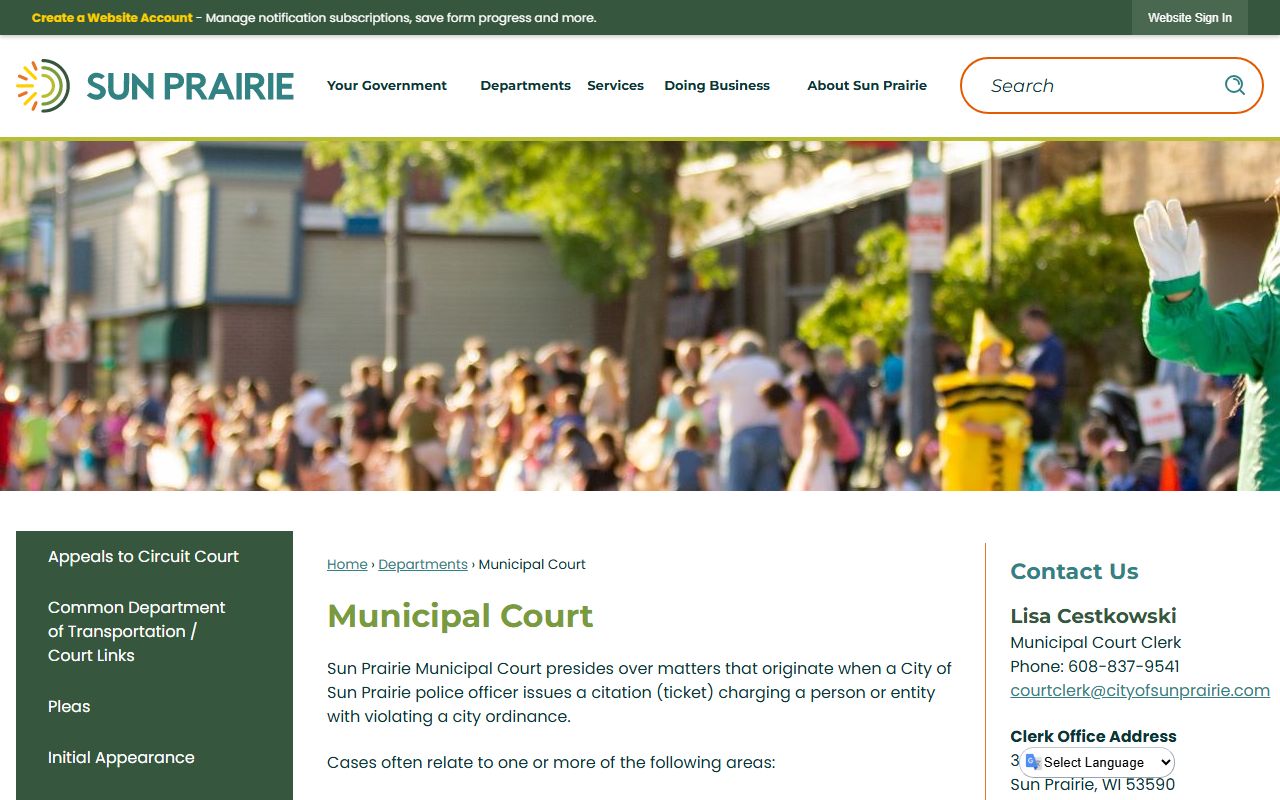
That image works because municipal court records are often the official record of a city citation or local violation. A background check that stops at the police bureau can miss what happened after the citation was issued, so the court file is the piece that shows whether the matter was heard, scheduled, or otherwise processed. If you already know the citation number or hearing date, the clerk can usually move more quickly because the search starts with a narrow target.
Municipal court matters are easy to misread if you only look at city access tools or police records. A citation may show up in a different place than a report, and the court is the office that clarifies the legal side of the record. That is why the court belongs in the background check workflow even when the original incident started with a police call. The city court record often tells you what happened next, which is just as important as the original incident itself.
Dane County Circuit Court Search
If the Sun Prairie matter moved into the county system, use Wisconsin Circuit Court Access for the Dane County circuit court path. WCCA gives you the public case view so you can see whether a county file is already online before you contact the clerk of courts. That is useful because Sun Prairie records can begin in a city office and later appear in county court, and the public case search is the easiest way to tell which step comes next. If the case number is available, WCCA can quickly show whether the record is public and what the docket trail looks like.
WCCA does not replace the county clerk, but it helps you avoid a wasted request. If the matter is already public, you may only need a copy or a docket check. If it is not public, WCCA tells you that too, which helps you decide whether the city office or the county clerk is the better contact. For a Sun Prairie background check, that saves time because the search moves from a city record to a county record only when the facts call for it.
Sun Prairie Records Flow
The cleanest Sun Prairie workflow is simple. Use the public access portal first if you are not sure which office has the record. Go to the police records bureau for incident reports, payment questions, or fingerprinting. Use municipal court for city citations and case scheduling questions. Check WCCA when the matter may have moved into Dane County circuit court. That path reflects how Sun Prairie and the county store records, so it usually gives you the fastest answer with the least confusion.
It also helps to remember that each office answers a different type of question. The public records portal handles the request trail. The police bureau handles police documentation. Municipal court handles city case processing. WCCA shows the county court summary. When you keep those roles separate, a background check becomes a practical search instead of a series of guesses. That is the main advantage of Sun Prairie's system: it gives you enough structure to know where to start and enough detail to know when you have reached the right office.